Leave no child behind – Designing truly inclusive playgrounds
Lappset introduces playground inclusivity ratings to make sure that children with impairments can get in on the fun.
Play is a right, not a reward. Every child should be able to participate in play and enjoy themselves – that goes without saying, right?
The playground industry is still not the most inclusive industry out there. The hard truth of it is that not all children can share the playground experience: especially children with special needs and disabilities are often left in the wind. However, the state of play is about to become a lot more democratic in the future.
Lappset and the Finnish Paralympic Committee have collaborated to create inclusivity ratings which offer information about the inclusivity and accessibility factors relating to playground products.
Launched in connection to – or rather, integrated into – the Lappset Prime playground collection, these ratings look at such issues as mobility, vision, hearing, speech, intellectual abilities and motor coordination.
Good design to the rescue!
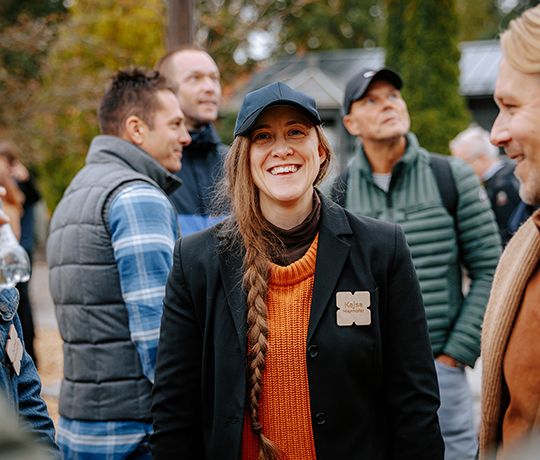
Lead Designer Kajsa Mayrhofer says that Lappset started the development of the inclusivity ratings already 2,5 years ago – while feeling the burden of a great responsibility. Lappset wanted to do right by all children with the inclusivity ratings:
“We wanted to take children seriously and ignore nobody. We feel that if anybody is left out, it’s not good design – we must do better,” Mayrhofer says. The idea itself is a simple one: universal design should support different ways of moving, sensing, and interacting – and stay clear of ‘one-size-fits-all’ solutions.
“For example, if there are standing or balance issues, we want to provide proper walking support with our products. Our design encourages the use of different parts of your body to engage in play,” says Mayrhofer who joined Lappset in 2017 and serves as the “gatekeeper” of inclusion and accessibility at the company.
Say ‘no’ to playground heartbreak
According to Mayrhofer, there’s nothing more heartbreaking than planning a trip to a great new playground in your town – and then finding out that the playing options are minimal. The kids with impairments can be so disappointed that the parents automatically shun away from repeating such an ordeal.
“The fear of another bad experience is so great that you’re not likely to try it again in a while.”
Mayrhofer points out that while children may be neglected in one way or another, the United Nations, for instance, has given us clear guidelines on how to rectify the situation.
The UN Declaration of the Rights of the Child recognises the right of the child “to engage in play and recreational activities appropriate to the age of the child and to participate freely in cultural life and the arts”. While on the playground, a child has the right to freedom of expression, too.

Two children playing on a rocking Lappset Prime play equipment on a green and blue surface.
Respect all children
Mentally or physically disabled children are mentioned in the Declaration as well as they should enjoy “a full and decent life”, in conditions which “ensure dignity, promote self-reliance and facilitate the child’s active participation in the community”.
“Play is very important for all childen and we must do our utmost to safeguard it,” believes Mayrhofer.
Legislative measures have been taken, too, to ensure that playgrounds are accessible and inclusive: for instance, in Mayrhofer’s native Sweden new law mandates that playground equipment used by schools is inclusive to a certain degree.
“Municipalities, which are a key customer group for Lappset, are turning towards inclusivity in a big way,” she says, pointing out that this is a good development – and only fair, since municipal activities are funded by the common taxpayer.
“If playgrounds are paid by everyone, everyone should be able to enjoy them, as well.”
Body & Mind & Senses
So the need to champion inclusive play is well established – but how do these inclusivity ratings work in practice? – Mayrhofer explains that each Prime product is assessed from three perspectives – Body, Mind and Senses – and ranked for Inclusion and Accessibility using a rating system of 0, 1, 2, 3.
“No new Lappset product will be designed with zero points,” Mayrhofer says. While all Prime products now get a “passing grade” in inclusion & accessibility, the ambition does not stop there: Mayrhofer reports that via various modifications, many products have boosted their inclusion & accessibility rating as much as 40-70%.
“For example, a product can show a 40% inclusion & accessibility improvement with adaptations that are not particularly massive in nature,” she says. Design excellence is often in the details and that holds true here.
Still, a 90+ inclusion and accessibility rating is very hard to achieve, even for the next-gen Prime product family. “We have only three or four products that receive that rating.”
Anchored in fact, driven by passion
Putting together the inclusivity ratings package was an arduous task. Already in the beginning of the project, Lappset acknowledged that the topic itself is sensitive – that while accommodating one group of special needs children, some other group might feel slighted. The solution: approach the issue as a design problem, get the facts and drown out the noise.
“When you model it as a design process, the challenges become easier to discuss and we could make some headway,” says Mayrhofer.
Recognizing that the project was highly ambitious, Mayrhofer started gathering benchmarks and creating concepts she now calls “fluffy” to get the ball rolling in earnest. She found out that language-related issues, ADHD and autism are the most common impairments faced by children today.
“In contrast, there aren’t that many children in a wheelchair or suffering from vision impairments – but, overall, it’s a very diverse set of different impairments that are impacting children.”

Getting practical
How do you build a playground, then, that addresses the special needs of all? – Granted, there is no magic bullet, but, along the way, Mayrhofer discovered many features that work. She realised that the more concrete the solution, the better:
“For example, we found out that adding handles to playground equipment helps those with balance or coordination impairment – instead of having four handles, just put in eight, if that allows play for everyone.”
Another design gem: when there’s a multilevel structure, take away floors and install nets. This way, those on the ground level can see what’s happening above – and participate, even, as nets allow the passing of objects or tag.
“Replacing floors with nets adds a whole new dimension into play.”
Boost communication!
Similarly, adding communication signs to playgrounds enhances the quality of play for many children. Those with hearing impairments can familiarise themselves with the signs – but they are equally helpful for kids with communication/comprehension issues.
“After all, a communication-related impairment is the most common form of children’s impairment in the Nordics,” Mayrhofer says.
The children can communicate with the signs, letting others know when they want to play by themselves or ask another child to play with them.
“As the children understand each other better, this de-escalates conflicts in the playground.”
Pushing for the best possible outcome
Kajsa Mayrhofer and her team have clearly achieved a remarkable feat. Calling the inclusivity ratings a “big experiment,” she is grateful for having lots of freedom to operate within the Lappset product universe.
“We had lots of leverage to really push the design.”
Mayrhofer acknowledges that the inclusivity ratings system is just the starting point of a long journey – and that the system is likely to expand in the future.
“But we have to really engage in this discussion and try to make playgrounds that are fun for everyone,” she says. Mayrhofer encourages the entire playground industry to join the inclusivity movement.
“Let’s not talk about a trend – let’s talk about a brand new direction that benefits us all.”