Interactive play as a remedy for obesity
Childhood obesity is becoming more prevalent. In 2016, almost 14 percent of children between the ages of 4 – 18 were overweight. Physical activity is one of the solutions to this rising problem. The City of Amsterdam is using interactive playground installations, amongst others, to encourage children to play sports and be active in public spaces. The ninth interactive playground installation was recently completed in Amsterdam. Below is an interview with Hafid Ouaali, Sports and Facilities Advisor. – Written by Manon van Ketwich
Amsterdam’s public spaces are where urban life takes place and flourishes. Efficient spatial planning is more critical than ever with the ever-growing number of residents and new home construction within the city limits.
In addition to contributing to resolving the housing shortage, the city is also committed to promoting sports and physical activity. Investing in sports means investing in public spaces. If we want to get as many people as possible playing sports, we’ll need additional square meterage to meet increasing demand.
Initiatives such as the Quest Junior Memo offer a particularly good solution due to the playground structures’ relatively small size. The ease with the interactive element can be integrated with the public space. In addition to the benefits of spatial planning, interactive play is also an essential aid for combatting obesity and children’s inactivity. The current generation of children is growing up with tablets, smartphones, and online gaming, due to which play has now taken on a completely different meaning. To encourage children to engage in physical activity, static games are now being combined with physical activity. The additional competition element always challenges users to broaden their horizons, particularly in children who dislike physical activity.
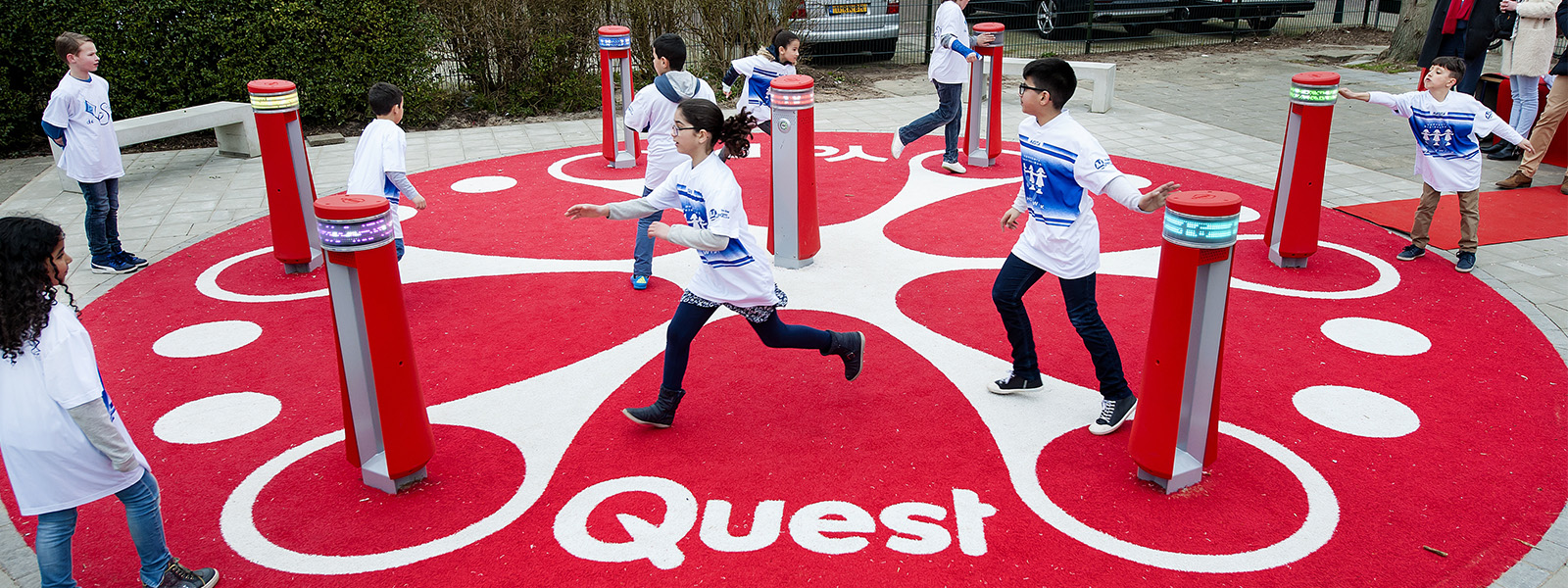
Children playing Lappset Memo
A
Amsterdam aspires to position itself as an urban city where physical activity is an integral part of spatial design. Due to urbanization and increasing pressure on public spaces, we face the challenge of keeping the city liveable despite accelerated urbanization, combined with different living, working, and moving cities. The Quest Junior Memo is ideally suited to a city like Amsterdam due to its dynamics. A spring rider will always be a spring rider, but the Memo program can be adapted continually, and as a whole, it fulfils the demands of this era.
What is your take on play in the city, combined with the themes addressed by the Quest Junior Memo?
The sports and games space continues to evolve and is exceptionally sensitive to new trends and developments. It’s essential to have the confidence to invest in new initiatives to meet the new generation of children’s needs. Interactive play is a relatively new phenomenon in our capital city. I am convinced that this new way of playing can rely on sufficient support and interest once it becomes tangible to new users.
Furthermore, the combination of physical activity and education is a development we are following closely. For example, we are swamped designing school playgrounds in Amsterdam in a specific way to make them suitable for (environmental) education. As such, the Quest Junior Memo is a useful addition to the school’s educational curriculum.
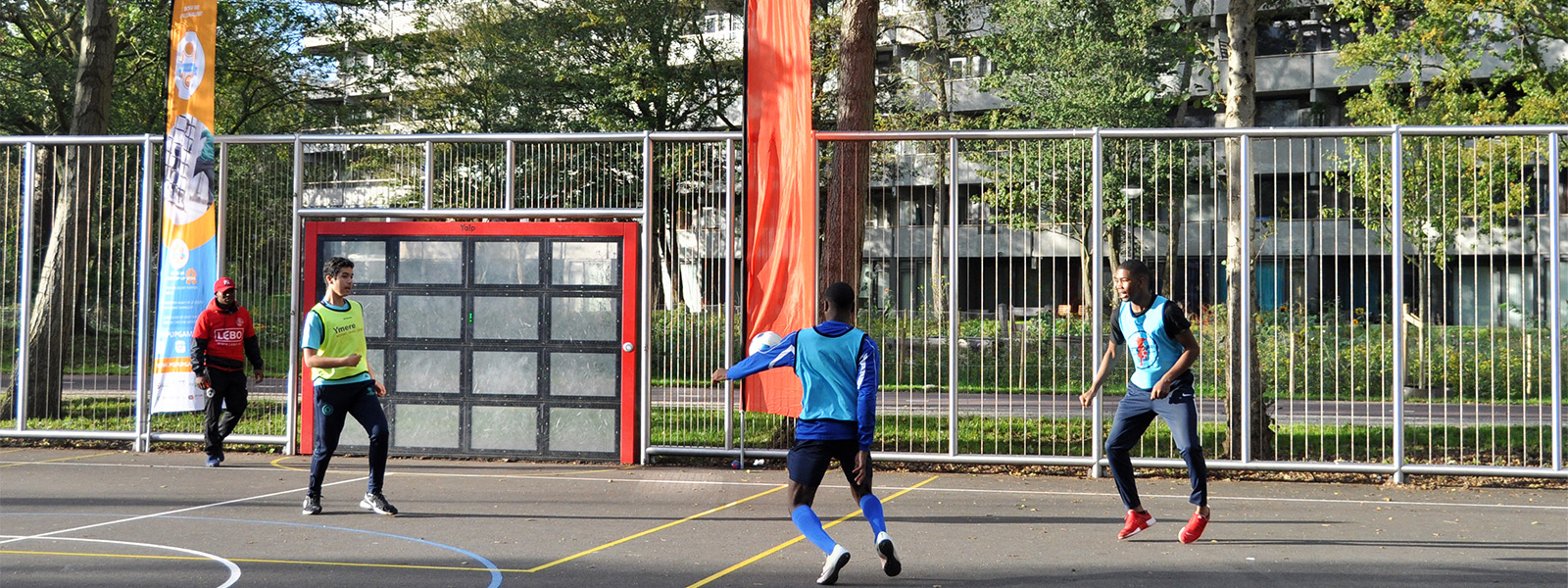
People playing on the Lappset Sutu